

Imagine sitting at the kitchen table with your aging mother, noticing the quiet way she struggles to reach the top shelf or the slight hesitation in her step. You want to wrap her in a protective embrace of safety, but the healthcare world feels cold and confusing, especially when you're trying to grasp the difference between home care and home health.
You aren't alone in feeling this weight. It's natural to feel a knot of anxiety when you're trying to protect a parent's independence. Many families find themselves at this crossroads, worried that picking the wrong level of support might compromise the dignity their loved one cherishes.
This guide is here to offer you a gentle path forward. Discover the vital distinctions between medical and non-medical support so you can choose the path that best preserves your loved one's dignity and safety. We believe that clarity is the first step toward true peace of mind.
We'll explore how different services match your parent's unique needs and provide a clear starting point for families in Palm Beach or Broward County. By the end, you'll feel empowered to act as a devoted advocate for the person who once did the same for you.
Key Takeaways
- Understand the fundamental difference between home care and home health to ensure your loved one receives the specific type of support their body and soul require.
- Identify when clinical medical support is necessary, such as during surgical recovery or when specialized physical and occupational therapy is needed to heal.
- Learn how non-medical senior home care preserves dignity through gentle assistance with daily tasks like dressing, bathing, and heartfelt companionship.
- Use our simple decision framework to assess whether your family needs short-term medical intervention, long-term personal care, or a beautiful harmony of both.
- Discover how a heart-centered approach can transform caregiving from a source of stress into a path of peace for families in Palm Beach and Broward Counties.
Understanding the Core Difference: Medical vs. Non-Medical Support
Have you ever found yourself nodding along in a doctor's office, only to realize later that the terms "home health" and "home care" have blurred together? It's a common struggle for many families. The names sound like echoes of each other, yet they lead down very different paths of support. Understanding the difference between home care and home health is the first step in ensuring your loved one feels truly seen, protected, and comfortable in their own space.
The primary split is between clinical medical treatment and daily living assistance. While one focuses on the illness or injury, the other focuses on the person living with it. To help clarify this, many experts point to the distinction between home care and home health care as the line between professional medical intervention and supportive personal services that nurture the soul.
The Clinical Lens: What Defines Home Health?
Home health is essentially a clinical service brought into the sanctuary of the home. It's almost always short-term and must be directed by a physician's prescription. If your parent is recovering from a major surgery or managing a complex wound, this is the path they'll likely take. It involves skilled nursing, physical therapy, or speech-language pathology. Think of home health as a bridge. It spans the gap between a hospital stay and a return to independence. Because it's medical in nature, the focus is on measurable recovery goals. Once those clinical milestones are met, the service typically ends.
The Heart-Centered Lens: What Defines Home Care?
Home care is a longer-term, lifestyle-focused embrace. It doesn't require a doctor's order because it isn't about medical procedures. Instead, it's about the "Activities of Daily Living," or ADLs. This includes the gentle, respectful help with bathing, dressing, and grooming that preserves a senior's dignity. It's about providing the extra hands needed to keep a home running smoothly.
Beyond physical help, home care offers the emotional anchor of companionship. It includes non-medical support like meal preparation, light housekeeping, and running errands. This isn't just about checking tasks off a list; it's about having a "Compassionate Guardian" present. This presence fights the shadows of isolation and ensures your loved one's home remains a place of joy and safety. Unlike the clinical nature of home health, home care is directed by you and your family, allowing for a personalized rhythm that honors your parent's unique spirit and history.
When Home Health is the Right Choice: Clinical Recovery
There are seasons in life when the home must transform into a sanctuary of clinical healing. If your loved one is returning home after a major surgery or a significant hospital stay, their immediate needs are often medical. This is where home health steps in. It's a specialized, physician-ordered service designed to treat a specific condition until the patient is stable. Understanding the difference between home care and home health helps you recognize when a licensed professional is required to manage complex medical tasks that go beyond daily comfort.
During this time, the focus is entirely on clinical outcomes. A registered nurse might visit to provide wound care or monitor vital signs. A physical therapist might come by to help your parent regain strength after a hip replacement. These services are often covered by insurance when they meet specific criteria. You can learn more about eligibility through Medicare coverage for home health services, which outlines how these clinical visits are structured and funded.
Common Scenarios for Medical Home Health
Medical home health is the right choice when a doctor mandates professional oversight. It's a temporary bridge meant to move a person from a state of crisis to a state of stability. Common situations include:
- Recovering from orthopedic surgery requiring intensive physical or occupational therapy.
- Managing acute illnesses that require a licensed nurse for injections or IV therapy.
- Wound care that requires sterile procedures and clinical monitoring to prevent infection.
- Education on new, complex medical equipment such as oxygen concentrators.
The Limitations of the Medical Approach
While home health is vital for recovery, it has a very specific, narrow scope. A nurse is there to heal the wound, not to fold the laundry or prepare a warm, nourishing meal. These clinical visits are usually brief, often lasting only about an hour. Once the nurse or therapist leaves, the "gap" in care becomes visible. Families often feel a sense of loneliness or anxiety during the long hours between medical visits.
Because these interventions are temporary, they often end as soon as the medical crisis has passed. This can leave a senior feeling vulnerable if they aren't yet ready to handle the rhythm of daily life alone. If you find that the medical crisis is over but the need for a protective, nurturing presence remains, looking into senior home care can provide the bridge to long-term safety and peace of mind.
The Vital Role of Home Care: Preserving Dignity and Independence
While medical services focus on healing the body, home care is dedicated to nurturing the person. It's here that the difference between home care and home health becomes most beautiful. Instead of clinical visits that end when a task is done, home care provides a steady, protective presence. It's about the small, quiet moments that make life feel like life again. Whether it's the gentle way a caregiver helps with bathing or the shared smile over a morning cup of coffee, these services prioritize the dignity of your loved one above all else.
The National Institute on Aging emphasizes that various services for older adults living at home are essential for maintaining independence. This support isn't just about "checking boxes." It's about ensuring safety through fall prevention and medication reminders. It's about providing personal care assistance, such as dressing and grooming, with a level of respect that honors the individual's history and self-worth. In this space, the caregiver acts as a "Compassionate Guardian," watching over both the physical and emotional well-being of your parent.
Beyond Chores: The Emotional Impact of Companionship
Companionship care is the preservation of a loved one's social soul. It transforms the lonely hours of the day into opportunities for connection. When a caregiver helps with meal preparation, it isn't just a kitchen task; it's a social event where stories are shared and traditions are honored. For seniors in Palm Beach and Broward Counties, staying connected to the vibrant South Florida life is vital. Transportation services ensure they can still visit a favorite park, attend a religious service, or meet a friend for lunch, preventing the shadows of isolation and depression from taking hold.
Non-Medical Memory Care at Home
For families navigating the complexities of Alzheimer’s and dementia, the home can sometimes feel like a place of uncertainty. Specialized non-medical support creates a sanctuary of safety and calm. By establishing a predictable routine and using gentle redirection, caregivers help manage the anxiety that often accompanies memory loss. Zèl Bondye LLC Home Care Services' approach is rooted in nearly 30 years of heart-centered experience, focusing on the person behind the diagnosis.
- Creating a secure environment to prevent wandering while allowing for freedom of movement.
- Using rhythmic routines to reduce the "sundowning" effect and promote restful sleep.
- Supporting the family through respite care, providing the relief needed to remain a loving daughter or son.
This level of care ensures that even as memory fades, the dignity of the individual remains brightly lit. It's a devoted partnership that walks beside your family through every sensitive transition.
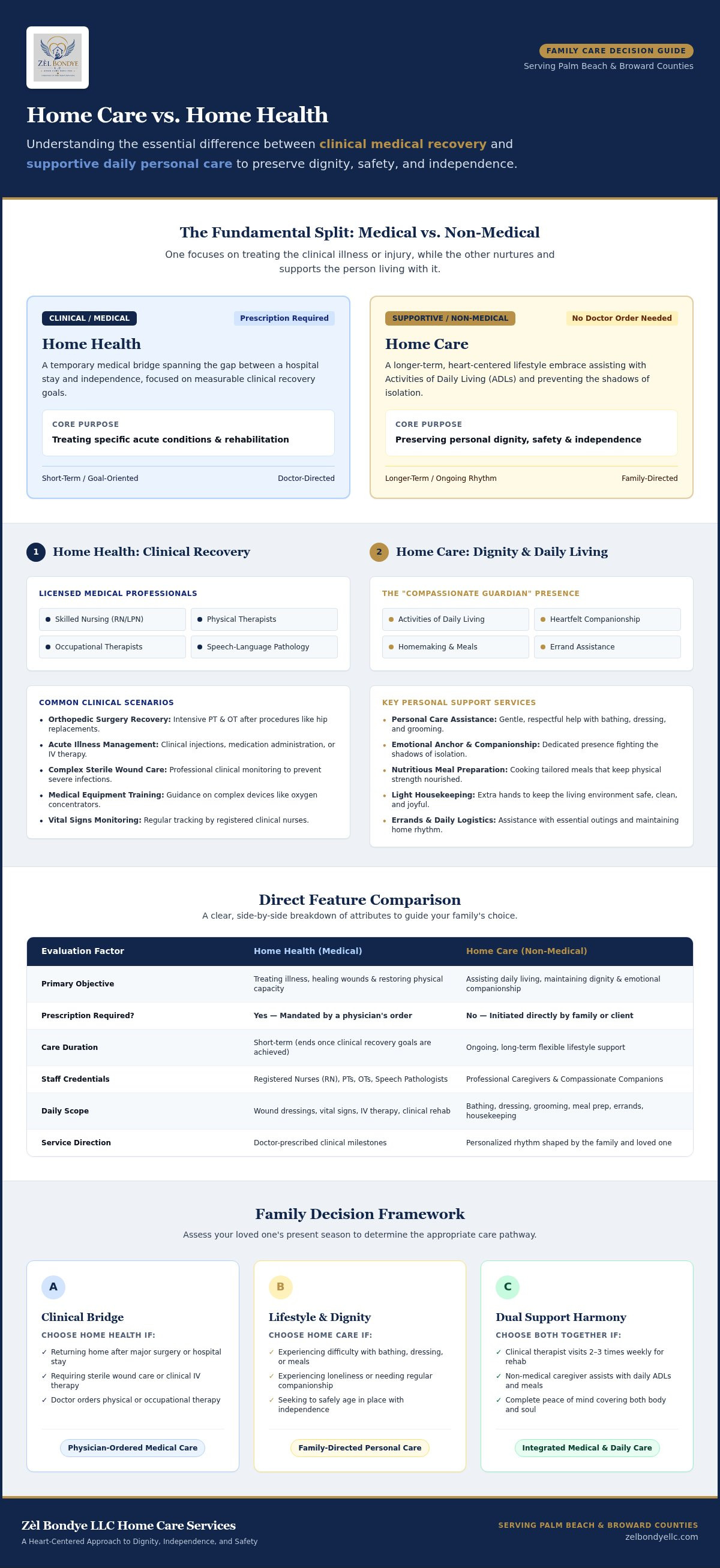
Comparing Your Options: A Decision Framework for Families
Deciding on the best path for your parent isn't just a logistical puzzle; it's a deeply emotional choice about their future and your peace of mind. One of the most common misconceptions is that you must choose only one service. In reality, these two paths often work in beautiful harmony to create a complete circle of protection. While a nurse might visit for an hour to manage a clinical recovery, a caregiver provides the steady, nurturing presence that ensures your loved one is bathed, fed, and safe during the rest of the day. Understanding this difference between home care and home health allows you to build a comprehensive safety net that honors both medical needs and personal dignity.
The financial landscape also plays a role in this decision. Generally, home health is funded by Medicare or private health insurance when it meets specific clinical criteria for short-term recovery. Conversely, home care is typically supported through private pay, long-term care insurance, or veteran benefits. This distinction is vital because it determines how long the support can stay in place. While medical visits end when the crisis passes, non-medical support can continue as long as your loved one desires to stay in the comfort of their own home.
The 'Right Time' Checklist
How do you know which service to call first? Start by observing the small details of your parent's daily life. If they are struggling with a new diagnosis, managing a complex wound, or requiring physician-mandated therapy, medical home health is the priority. However, if you notice unexplained weight loss, missed medication reminders, or a house that has become uncharacteristically messy, companionship and safety are the urgent needs. Often, the biggest hurdle is when a parent says they don't need help. In these moments, try reframing the conversation. It isn't about losing independence; it's about accepting a partner who helps them maintain it.
Respite Care: Support for the Family Advocate
You are likely the primary advocate for your loved one, but even the most devoted guardian needs a moment to breathe. Respite care is designed specifically for you. It prevents the heavy weight of caregiver burnout by providing a trusted professional presence while you attend to your own life or simply rest. This isn't a luxury; it's a vital part of staying healthy enough to continue your role. If you're feeling overwhelmed by these choices, reaching out for respite care can give you the clarity and rest you deserve. You don't have to carry this journey alone.
A Gentle Path Forward in Palm Beach and Broward Counties
The journey to finding the right support for a parent is one paved with love, but it often feels like a steep climb. In Palm Beach and Broward Counties, families face unique challenges, from managing seasonal changes to finding a caregiver who truly understands the rhythm of life here. Fabie founded Zèl Bondye LLC Home Care Services with a simple, heart-centered mission: to provide the kind of care she would want for her own family. With nearly 30 years of caregiving experience, she understands that while you might be learning the difference between home care and home health today, what you're really seeking is a partner who sees your loved one's soul, not just their symptoms.
Our philosophy is built on the idea of being a "Compassionate Guardian." We don't just provide a service; we offer a devoted partnership that walks beside you through every sensitive transition. By focusing on the person behind the age, we create an environment where safety and dignity coexist beautifully. This heart-centered approach ensures that your parent isn't just "looked after," but is truly cared for in a way that honors their life's story.
Local Care for Local Families
We believe that care should feel like a warm, supportive embrace from a neighbor. Our services reach across West Palm Beach, Boynton Beach, Delray Beach, and Fort Lauderdale, touching the lives of seniors who wish to age with grace in the homes they love. Florida's senior community is diverse and vibrant, and their care should reflect that unique spirit. We bridge the gap between clinical requirements and personal happiness by focusing on the human elements that medical visits often miss. While a doctor might manage the physical condition, we manage the quality of life, ensuring every meal is a social event and every errand is a chance for connection.
Your Next Steps Toward Peace of Mind
Starting the conversation with a parent about bringing help into the home can be a delicate dance. It's often best to lead with love and listen to their fears before offering solutions. When you're ready, a Zèl Bondye care assessment is a gentle, unhurried process. We sit down with you and your loved one to understand their routines, their favorite memories, and their specific safety needs. This isn't a cold, clinical intake; it's the beginning of a relationship built on trust and accountability.
By creating a personalized care plan that evolves as your family's needs change, we ensure that your loved one is always protected. Whether you need specialized dementia support or simple companionship, the first step is often the most relieving. Reach out to Fabie and the team for a compassionate consultation today, and let us help you find the quiet strength and peace of mind you've been searching for.
Embracing a Future of Peace and Dignity
Choosing the right path for your parent is an act of profound love. By understanding the difference between home care and home health, you've already taken the first step toward securing their comfort and independence. While clinical medical needs may come and go, the need for a protective, nurturing presence in the home remains a constant for many seniors as they age in place.
Fabie and her team at Zèl Bondye bring nearly 30 years of compassionate caregiving experience to families throughout South Florida. Whether your loved one requires specialized Alzheimer's and dementia support or a personalized care plan designed to preserve their safety, we're here to act as your devoted advocate. You don't have to navigate these sensitive transitions in isolation; a partner who leads with the heart is ready to help.
Connect with Fabie today for a heart-centered care consultation and discover the relief that comes from true guardianship. Your family's peace of mind is within reach, and a brighter, safer tomorrow for your loved one begins with a single conversation.
Frequently Asked Questions
Is home care the same as home health care?
No, these services are distinct branches of support. Home care focuses on nurturing the person through assistance with daily activities like bathing and meal preparation. Home health is a clinical service prescribed by a doctor for medical recovery. Understanding the difference between home care and home health is vital for families. It ensures your loved one receives the specific guardianship they need, whether that's a nurse's clinical skill or a caregiver's compassionate presence.
Does Medicare pay for non-medical home care in Florida?
Medicare typically doesn't cover non-medical home care when it's the only service required. It's designed to pay for short-term, skilled medical interventions like physical therapy or nursing. For the long-term, heart-centered support provided by a caregiver, families often use private pay, long-term care insurance, or specific veteran benefits. We can help you explore these paths to ensure your parent remains safely in their South Florida home without financial uncertainty or fear of losing their independence.
Can my loved one receive both home health and home care at the same time?
Yes, and many families find this combination creates the most secure environment. While a home health nurse might visit for an hour to manage wound care, a personal caregiver stays longer to help with lunch, laundry, and companionship. This "co-care" model ensures that clinical needs are met while the emotional and physical rhythm of daily life continues without interruption. It provides a complete circle of protection for your loved one during their recovery journey.
How do I know if my parent needs a nurse or just a caregiver?
If your parent requires injections, sterile wound care, or intensive physical therapy, a licensed nurse or therapist is necessary. However, if the struggle is with loneliness, forgotten medication reminders, or difficulty with bathing and dressing, a compassionate caregiver is the right choice. Take a moment to observe their daily life. Are they safe while moving? Are they eating well? Often, the need for a protective guardian outweighs the need for short-term clinical intervention.
What is the role of a non-medical caregiver in dementia support?
A non-medical caregiver acts as a steady anchor for those living with memory loss. We focus on creating a predictable, calm routine that reduces anxiety and confusion. This includes gentle redirection during difficult moments and ensuring the home remains a safe haven against wandering. By providing specialized Alzheimer’s and dementia support, we honor the person's dignity while giving family members the respite they need to remain a loving, present daughter or son.
What happens if my loved one's needs change from non-medical to medical?
As a devoted family advocate, we keep a watchful eye on your parent's well-being. If we notice a change that requires clinical attention, such as a new wound or sudden decline, we communicate with you immediately. While we don't provide skilled nursing ourselves, we work alongside your medical team. This ensures a seamless transition so your loved one never loses that essential layer of non-medical support even when clinical needs arise.
Does home care include transportation to doctor appointments in Palm Beach County?
Yes, we provide reliable transportation to help seniors stay connected to their community and their health. Whether it's a medical appointment in West Palm Beach or a social visit in Delray Beach, our caregivers ensure your loved one arrives safely and comfortably. This service is about more than just a ride; it's about preserving their independence. We ensure they never feel isolated or trapped at home simply because they can no longer drive themselves.
How long does it take to start home care services with Zèl Bondye?
We move at the pace your family requires, starting with a heart-centered care assessment. Fabie and her team typically meet with families in Palm Beach or Broward County within a few days to understand your unique situation. We then create a personalized care plan that prioritizes dignity and safety. Our goal is to provide relief as quickly as possible while ensuring the caregiver we match with your parent is a perfect fit for their soul.

